Does GPS Tracking Actually Pay for Itself? We Ran the Numbers.
Before you spend a dollar on anything for your business, you want to know if it's worth it. Let's do the math together.

Every business owner has a mental filter for new expenses. Before anything gets approved — even something small — the question is always the same: is this going to make me money, save me money, or is it just another monthly bill?
It's a good filter. You should apply it to GPS vehicle tracking too.
So let's actually do it. Let's take a realistic small service business — say, 5 vehicles, a mix of vans and trucks, running routes five days a week — and figure out whether GPS tracking pays for itself. Not in theory. In real numbers.
What Fleet Aware Actually Costs
Let's start with the easy part.
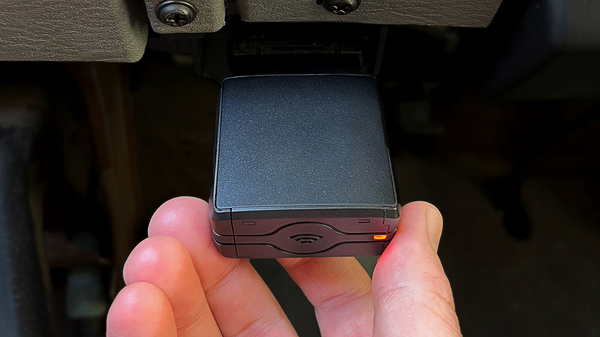
The Fleet Tracker hardware is $79 per vehicle — a one-time purchase
The subscription is $15 per month per vehicle — no long-term contract, cancel anytime
For a 5-vehicle fleet:
Cost | Per Vehicle | 5 Vehicles |
|---|---|---|
Hardware (one-time) | $79 | $395 |
Monthly subscription | $15/mo | $75/mo |
Annual subscription cost | $180/yr | $900/yr |
So your total first-year investment for 5 vehicles is roughly $1,295. After that, it's $900 per year — $75 a month — to keep the whole fleet tracked.
Now let's look at what it saves you.
Savings Area #1: Fuel
This is usually the first place business owners see a return — and it's often bigger than they expect.
There are three main fuel drains that GPS tracking addresses directly:
Excessive idling. As we covered in a previous post, idling a typical service van burns roughly 0.8 to 1.5 gallons per hour. If each of your 5 drivers idles an average of just 30 minutes per day — a conservative estimate — that's 2.5 hours of idling across your fleet daily. At $4/gallon, that's roughly $8–$15 in wasted fuel every single day.
Over a 250-day work year: $2,000–$3,750 in idling fuel costs alone.
Once drivers know idling is being tracked, it drops — significantly. Most fleet owners report a 20–40% reduction in idling within the first few weeks.
Speeding and aggressive driving. Driving 10 mph over the speed limit increases fuel consumption by 10–15%. Rapid acceleration burns even more. Across 5 vehicles driving 80–100 miles per day each, the fuel savings from smoother driving behavior can easily reach $100–$200 per month.
Unnecessary mileage. When drivers know their routes are being tracked, detours and personal errands during work hours disappear. Even saving 5 unnecessary miles per vehicle per day across 5 vehicles adds up to 6,500 miles per year — and the fuel cost that goes with it.
Conservative fuel savings estimate for a 5-vehicle fleet: $150–$300/month.
Savings Area #2: Vehicle Maintenance
Hard braking destroys brake pads. Rapid acceleration stresses transmissions and drivetrains. Excessive idling degrades engine oil faster and causes carbon buildup.
These aren't dramatic failures — they're slow, steady wear that shortens the lifespan of your vehicles and pushes maintenance schedules forward.
Here's a rough look at what improved driver behavior saves on maintenance:
- Brake pads last 2–3x longer with smoother driving — saving $150–$300 per vehicle per replacement cycle
- Oil changes needed less frequently when idling is reduced
- Tires wear more evenly with less aggressive acceleration and braking
- Transmission and drivetrain stress reduced significantly
It's difficult to put a precise number on this because it compounds over time — but most fleet operators estimate $50–$150 per vehicle per year in avoided maintenance costs from behavior improvements alone.
For 5 vehicles: $250–$750 per year in maintenance savings.
Savings Area #3: Labor and Accountability
This one is harder to quantify but often ends up being the biggest return of all.
When drivers know their trips are being tracked — start times, end times, routes, stops — behavior changes. Long lunch breaks get shorter. Personal errands during work hours stop. Drivers arrive at job sites on time instead of making unplanned stops along the way.
Let's put a conservative number to it. If GPS tracking recovers just 30 minutes of productive time per driver per day across 5 drivers — that's 2.5 hours of labor per day that was previously being lost.
At an average labor rate of $25/hour, that's $62.50 per day in recovered productivity. Over a 250-day work year: $15,625.
Even if the real number is a fraction of that — say, 10 minutes per driver per day — you're still looking at $5,000+ per year in recovered labor value.
Savings Area #4: Dispute Resolution
One customer dispute — a refund, a free return visit, a lost account — can cost more than an entire year of GPS tracking subscriptions.
As we covered in a previous article, GPS trip history gives you timestamped, GPS-verified proof of exactly when your vehicle arrived at a customer's address and how long it was there.
One avoided refund or one retained client pays for months of tracking. This one is impossible to put a precise number on — but it's real, and it happens.
Savings Area #5: Insurance Protection
A single at-fault accident involving a company vehicle can cost a small business anywhere from $10,000 to well over $100,000 when you factor in repairs, medical costs, legal fees, and long-term insurance rate increases.
GPS tracking doesn't prevent every accident. But it does two important things:
It reduces risky driving behavior. Speeding and aggressive driving drop when drivers know they're being monitored. Fewer risky behaviors mean fewer accidents.
It gives you data in a dispute. If one of your drivers is involved in an accident and the data shows they were driving within normal parameters, that's evidence that can protect you from a liability claim that isn't your fault.
Even one avoided insurance incident more than justifies years of tracking costs.
The Full Picture: Year One ROI for a 5-Vehicle Fleet
Let's add it up conservatively:
Savings Area | Conservative Annual Estimate |
|---|---|
Fuel savings (idling, behavior, mileage) | $1,800 |
Maintenance savings | $500 |
Recovered labor productivity | $3,000 |
Avoided disputes / retained clients | $500 |
Total estimated annual savings | $5,800 |
Total first-year cost | $1,295 |
Net first-year return | $4,505 |
That's a return of roughly 4.5x your investment in year one — using conservative numbers.
In year two and beyond, with no hardware cost, the math gets even better.
What the Break-Even Point Looks Like
At $75/month for 5 vehicles, you need to save roughly $75/month to break even on the subscription alone.
That's less than one hour of idling prevented per day across your whole fleet.
Most business owners hit break-even within the first two to three weeks of having the system in place.
What Real Fleet Aware Customers Say
"Exactly what we were looking for — a robust system without contracts for only $15/month." — Dave, PS Electrical, Fleet of 8 Vehicleshttps___www_allaware_com.txt
"With Fleet Aware, we discovered operational flaws and driver issues. The setup process was smooth and quick to implement." — Mark, Sarto Countertops, Fleet of 10 Vehicles
"Fleet Aware helps me know where my employees are and where they've been. It took away the stress of not knowing." — Bobby, Bobby's Food Co., Fleet of 4 Vehicles
How to Get Started
The Fleet Tracker ships fast, plugs into your vehicle's OBD-II port in about 60 seconds, and you can start adding your vehicles to the system immediately after checkout — before the hardware even arrives.
No demo required. No sales call. No long-term contract. See how it works →
At $15/month per vehicle, the question was never really can I afford this?
It's how much has waiting already cost me?
👉 Get started with Fleet Aware →
Questions? Chat with us or call (855) 712-9273. No pressure, no demo required.