Is Your Driver a Liability? What Bad Driving Habits Are Really Costing Your Business
Hard braking, speeding, and aggressive driving aren't just safety concerns — they're quietly draining your budget and putting your business at risk.

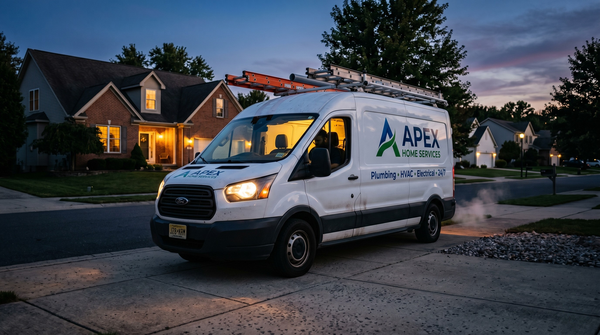
Let's be honest. When you hired your drivers, you didn't hand them the keys thinking "I hope this person doesn't wreck my truck and blow up my insurance rates." You trusted them. You needed someone reliable behind the wheel, and you moved on to the next thing on your list.
But here's the uncomfortable truth: most small business owners have at least one driver on their team with habits behind the wheel that are costing them real money — and they have no idea.
Not because they're bad people. Just because nobody is watching.
The Three Habits That Hurt the Most
When it comes to driver behavior, three things cause the most damage to your vehicles, your fuel budget, and your liability exposure:
1. Speeding
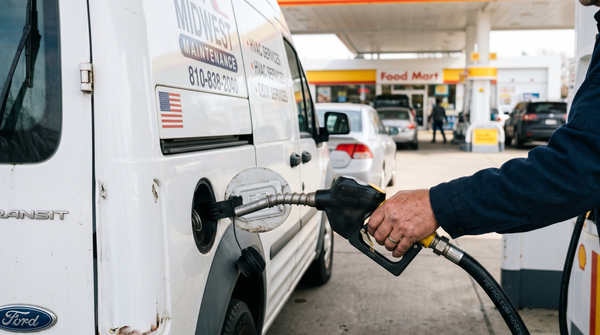
Speeding is the most common and the most dangerous. Beyond the obvious safety risk, driving 10 mph over the speed limit increases fuel consumption by roughly 10–15%. On a fleet of 5 vehicles driving 100 miles a day each, that adds up to hundreds of dollars in wasted fuel every single month.
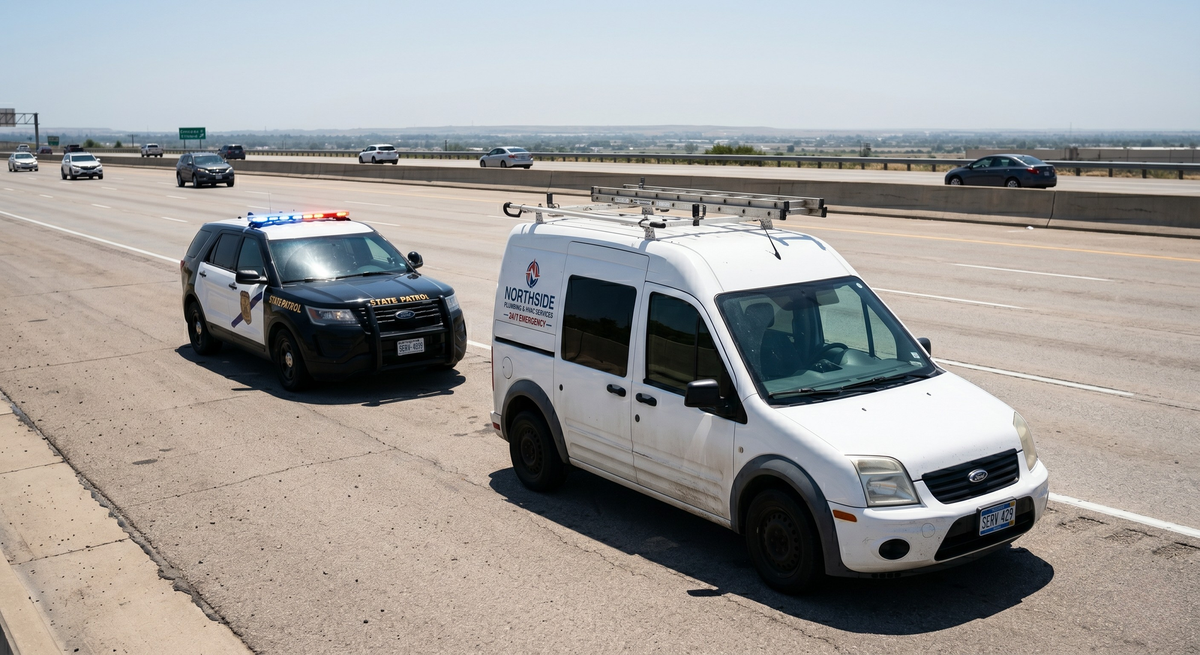
And if one of your drivers gets into an accident while speeding in a company vehicle? That's not just a repair bill. That's a liability claim, a potential lawsuit, and an insurance rate hike that follows your business for years.
2. Hard Braking
Hard braking is exactly what it sounds like — slamming on the brakes instead of slowing down gradually. It destroys brake pads faster than normal driving, stresses the suspension system, and puts wear on tires that adds up to premature replacements.
It's also a strong indicator of distracted driving. Drivers who brake hard frequently are often following too closely, not paying attention, or reacting late. None of those are things you want happening in a vehicle with your company name on the side.
3. Rapid Acceleration
Jackrabbit starts — flooring it from a stop — burn significantly more fuel than smooth acceleration and put unnecessary stress on the drivetrain, transmission, and tires.
Like hard braking, it's also a behavioral signal. Drivers who accelerate aggressively tend to drive aggressively overall. It's rarely an isolated habit.
What This Actually Costs You
Let's put some rough numbers to it, because this is where it gets real.
| Bad Habit | Direct Cost | Hidden Cost |
|---|---|---|
| Speeding | 10–15% more fuel per trip | Liability exposure, insurance increases |
| Hard braking | Brake pads wear 2–3x faster | Suspension, tire wear, downtime |
| Rapid acceleration | 5–10% more fuel per trip | Drivetrain and transmission stress |
| All three combined | Hundreds per vehicle per month | Potential accident, lawsuit, rate hike |
A single at-fault accident involving a company vehicle can cost a small business anywhere from $10,000 to well over $100,000 when you factor in vehicle repair, medical costs, legal fees, and the long-term insurance impact.
The math on preventing this is not complicated.
The Problem With Not Knowing
Here's what makes driver behavior so tricky for small business owners: you're not in the vehicle.
You can't see what's happening out there. You rely on your drivers to tell you if something goes wrong — and most of the time, they won't volunteer that information. A fender bender in a parking lot might go unreported. A pattern of aggressive driving might never come up in conversation.
Without data, you're managing your fleet on faith. And faith is not a business strategy.
The other problem? When you don't have data, you can't have a fair conversation. If you confront a driver about their driving habits based on a hunch or a complaint, it becomes your word against theirs. That's uncomfortable for everyone and rarely leads to real change.
But when you have data? The conversation is completely different.
What Changes When You Can See Driver Behavior
When drivers know their behavior is being tracked, something interesting happens: they drive better.
This isn't speculation — it's one of the most consistently reported outcomes from business owners who install GPS tracking. Speeding drops. Hard braking decreases. Fuel consumption goes down. Not because you threatened anyone, but because visibility creates accountability on its own.
Think about how you drive when you see a police car in your rearview mirror. You check your speed. You leave more following distance. You're more deliberate. That's the same effect — and it happens across your whole fleet the moment tracking is in place.
How Fleet Aware Tracks Driver Behavior
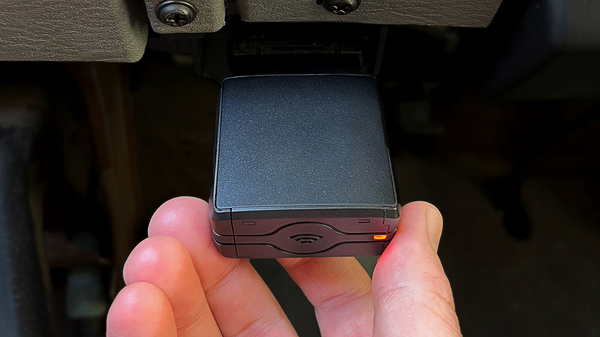
The Fleet Tracker from Fleet Aware monitors driver behavior automatically on every single trip — no cameras, no dashcams, no complicated setup required.
Here's exactly what gets tracked:
Speeding Alerts
You set the threshold — 5 mph over, 10 mph over, 20 mph over — whatever makes sense for your business and your routes. Every time a driver exceeds that threshold, an alert is logged on the trip and you can be notified instantly via push notification, SMS, or email.
Each speeding event in the trip history shows:
- How many mph over the limit the driver was going
- How long the speeding lasted
- The maximum speed reached during that event
- Exactly where on the map it happened
Hard Braking Alerts
Every harsh braking event is logged with a timestamp and map location. You can set custom sensitivity thresholds per vehicle — so a delivery van and a pickup truck can have different settings that make sense for how each is driven.
Excessive Acceleration Alerts
Same as hard braking — logged automatically, shown on the trip map, customizable per vehicle.
Driver Behavior Score Per Trip
Every trip in your history shows the total number of driver behavior alerts for that trip at a glance. You can see immediately which trips had issues without having to dig through every detail.
Having the Conversation With Your Drivers
Once you have data, the conversation with your drivers becomes straightforward — and fair.
Here's a simple approach that works:
Before you install tracking, have a team meeting. Tell your drivers that you're adding GPS tracking to the fleet. Explain that it tracks location, trips, and driving behavior. Be transparent about why — fuel costs, vehicle maintenance, safety, and liability. Most employees respect honesty.
After a week or two, pull your driver behavior reports. Look for patterns, not one-off events. Everyone brakes hard occasionally. A driver who has 15 hard braking events in a week has a pattern worth addressing.
When you sit down with a driver, lead with data, not accusations. "I can see there were 12 speeding alerts on your routes this week — can you walk me through what was going on?" is a completely different conversation than "I think you've been driving too fast."
Recognize improvement. If a driver cleans up their habits after the conversation, acknowledge it. Positive reinforcement is more effective than ongoing criticism.
The Insurance Angle (This One Surprises People)
Many business owners don't realize that documented driver behavior data can actually work in your favor with insurance providers.
If one of your drivers is involved in an accident and you have GPS data showing they were driving within the speed limit, not braking aggressively, and following normal driving patterns — that's evidence. It can support your defense in a liability dispute and potentially protect you from a claim that isn't your fault.
On the flip side, if the data shows the driver was speeding at the time of the accident, you want to know that before your insurance company does — so you can get ahead of it.
Either way, having the data puts you in a stronger position than not having it.
What Fleet Aware Makes Easy
With Fleet Aware, driver behavior monitoring is built into every subscription — there's no add-on fee, no extra module to purchase, no complicated configuration.
- Custom alert thresholds per vehicle — set what matters to you
- Real-time notifications via push, SMS, or email — know the moment something happens
- Full trip history with behavior alerts mapped inline — see exactly where each event occurred
- Automated fleet reports showing driver behavior trends week over week and month over month — so you can see if things are improving or getting worse
- All of this for $15/month per vehicle — no long-term contract, cancel anytime
And setup takes minutes. The Fleet Tracker plugs into the OBD-II port under the steering wheel — no tools, no mechanic, no downtime. See how it works →
The Bottom Line
Your drivers represent your business every time they get behind the wheel. The way they drive affects your fuel costs, your vehicle lifespan, your insurance rates, and your liability exposure.
You don't need to be a micromanager to stay on top of this. You just need the right information.
Know how your drivers are behaving. Protect your business. Run a safer fleet.
👉 See how Fleet Aware tracks driver behavior →
Have questions about whether Fleet Aware is right for your team? Chat with us or call (855) 712-9273. No pressure, no demo required.