The Hidden Cost of Idling: Why Your Trucks Are Burning Money While Sitting Still
If your drivers are waiting with the engine running, you're paying for it: and probably don't even know how much.

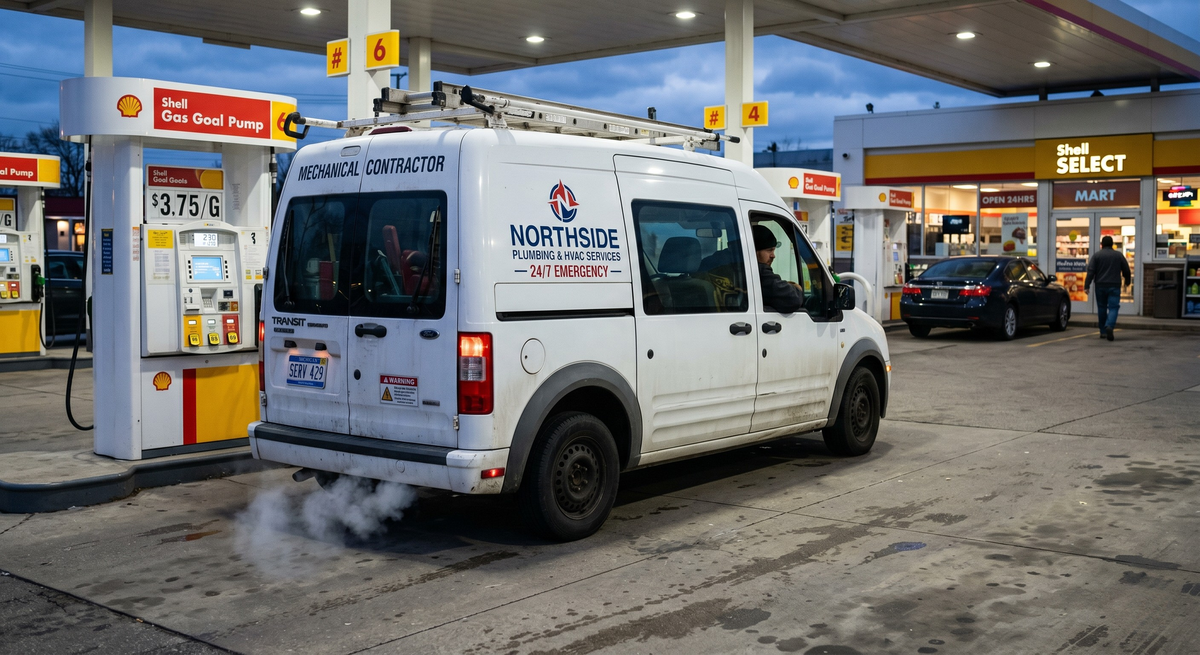
Picture this: It's a Tuesday morning. Your technician arrives at a job site 20 minutes early. Instead of turning the engine off, he leaves it running — air conditioning on, phone charging, radio going. No big deal, right?
Now multiply that by 5 drivers. Every day. Five days a week.
That "no big deal" just became one of the most consistent and invisible drains on your operating budget. And the frustrating part? It's almost impossible to catch without the right tools.
Let's talk about engine idling — what it actually costs you, why it happens, and how to stop it.
What Is Excessive Idling?
Idling is any time your vehicle's engine is running but the vehicle isn't moving. Some idling is unavoidable — sitting at a red light, warming up on a cold morning, brief stops between jobs.
But excessive idling is a different story. That's when drivers leave engines running for extended periods during lunch breaks, while waiting for a job to start, while filling out paperwork, or simply out of habit.
The rule of thumb most fleet operators use: if you're going to be stopped for more than 60 seconds, turn the engine off. The fuel used to restart the engine is almost always less than what you burn idling for even a minute or two.
The Real Numbers Behind Idling
Here's where it gets eye-opening.
The U.S. Department of Energy estimates that idling a typical vehicle burns roughly 0.8 gallons of fuel per hour. For larger trucks or vans — the kind most service businesses run — that number climbs to 1.5 gallons or more per hour.
Let's do some quick math:
| Scenario | Daily Idle Time | Fuel Burned/Day | Fuel Cost/Day* |
|---|---|---|---|
| 1 vehicle, 30 min idle | 0.5 hrs | ~0.4 gal | ~$1.60 |
| 5 vehicles, 30 min idle | 2.5 hrs | ~2.0 gal | ~$8.00 |
| 5 vehicles, 1 hr idle | 5 hrs | ~4.0 gal | ~$16.00 |
| 10 vehicles, 1 hr idle | 10 hrs | ~8.0 gal | ~$32.00 |
*Based on ~$4.00/gallon average
That's $32 a day just in wasted fuel — before you factor in the wear and tear on the engine. Over a full work year (250 days), a 10-vehicle fleet idling just one hour per day is burning through $8,000 in fuel for absolutely nothing.
What is idling costing your business?
Adjust the numbers below to see your wasted fuel spend, per year.
Estimate based on U.S. Dept. of Energy idling figures. Doesn't include added engine wear, maintenance, or emissions — so real cost runs higher.
Idling Doesn't Just Waste Fuel
Fuel cost is the obvious one. But excessive idling quietly damages your vehicles in ways that show up later — usually at the worst possible time.
Engine wear. An idling engine runs at a lower temperature than normal operating conditions, which means incomplete combustion. Over time, this leads to carbon buildup on cylinder walls, spark plugs, and exhaust systems.
Oil degradation. Extended idling accelerates oil breakdown, meaning more frequent oil changes and a shorter engine lifespan overall.
Increased maintenance costs. Vehicles that idle excessively tend to need more frequent servicing — and service calls mean downtime, which means jobs that don't get done.
Environmental and legal exposure. Several states and municipalities have anti-idling laws with real fines attached. If your drivers are idling in school zones, residential areas, or near certain commercial properties, you could be on the hook for penalties you didn't even know were possible.
Why Drivers Idle (And Why They Don't Think It's a Problem)
Here's the honest truth: most drivers who idle excessively aren't doing it maliciously. They just don't think about it.
Common reasons drivers leave engines running:
- Comfort — air conditioning in summer, heat in winter
- Habit — they've always done it this way
- Convenience — charging phones, running the radio
- Waiting — arriving early to a job site with nothing to do yet
- Paperwork — filling out job forms or checking schedules before heading in
None of these feel like a big deal to the driver. But from your perspective as the business owner, it adds up to real money leaving your pocket every single day.
The fix isn't yelling at your drivers. It's giving them visibility — and giving yourself the data to have a real conversation.
How You Actually Catch Idling Without Watching Every Vehicle
This is where GPS vehicle tracking changes everything.
With a system like Fleet Aware, idling is tracked automatically on every trip. You don't have to guess, ask, or follow anyone around. The system does it for you.
Here's what you get:
- Real-time idling alerts — get notified the moment a vehicle has been idling for more than 2 minutes
- Idling time per trip — see exactly how long each vehicle idled on every single trip throughout the day
- Daily idling totals — each day in your trip history shows aggregate idling time across your fleet
- Weekly and monthly reports — automated fleet reports show you whether idling is going up or down compared to the previous period, so you can see if your efforts to reduce it are actually working
You're not micromanaging. You're just running your business with accurate information instead of assumptions.
What Happens When Drivers Know They're Being Tracked
This is one of the most consistent things fleet owners report after installing GPS tracking: driver behavior improves almost immediately — often before you even say a word.
When drivers know that idling time is being recorded, they tend to turn the engine off. When they know speeding is being tracked, they slow down. It's not about punishment — it's about accountability.
Most business owners find that simply communicating to their team that tracking is in place is enough to change habits. A quick team meeting, a straightforward explanation of what's being tracked and why, and most employees get it. They understand you're running a business, not spying on them.
The ones who push back hardest are usually the ones with the most to hide — and that's useful information too.
A Simple Idling Policy That Actually Works
Once you have data, you can set a clear, fair policy. Here's a simple framework:
1. Set a threshold. Anything over 5 minutes of idling per stop is flagged for review. This gives drivers reasonable grace for brief stops without penalizing them for every red light.
2. Share the data weekly. Pull your fleet report every Monday and review idling totals by vehicle. You don't need to act on every single alert — just look for patterns.
3. Have the conversation with data, not accusations. Instead of "I heard you were sitting in the parking lot for an hour," you can say "I can see the vehicle was idling for 47 minutes on Tuesday at this address — what was going on?" That's a completely different conversation.
4. Recognize improvement. If a driver who used to idle 45 minutes a day is now down to 10, acknowledge it. Positive reinforcement works.
How Fleet Aware Handles Idling Tracking
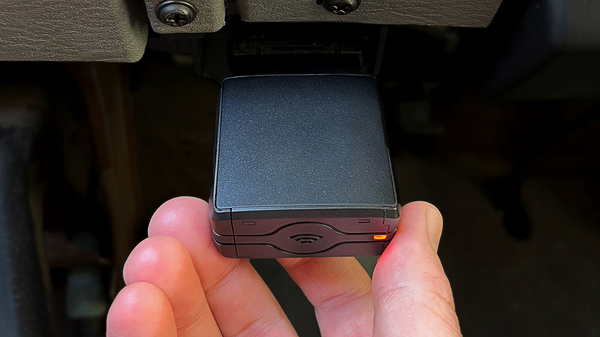
The Fleet Tracker from Fleet Aware plugs directly into your vehicle's OBD-II port — no tools, no mechanic, no downtime. Once it's in, idling tracking is automatic.
Here's what the idling data looks like in practice:
- Every trip in your history shows inline idling alerts right on the map — you can see exactly where the vehicle was sitting and for how long
- The daily summary for each vehicle shows total idling minutes for the day
- Automated reports (daily, weekly, or monthly) land in your inbox and show you fleet-wide idling trends over time — including whether it's going up or down compared to the previous period
And at $15/month per vehicle with no long-term contract, the math is simple: if tracking saves even one hour of idling per vehicle per week, it pays for itself many times over.
The Bottom Line
Idling is one of those problems that feels small until you actually measure it. Once you see the numbers — per vehicle, per week, per year — it stops feeling small very fast.
The good news is it's one of the easiest fleet problems to fix. You don't need to overhaul your operation or have difficult conversations. You just need visibility.
Know when your vehicles are idling. Know how much it's costing you. Fix it.
👉 See how Fleet Aware tracks idling and more →
Questions? Call us at (855) 712-9273 or chat with us online. No pressure, no demo required.