How to Stop Employees From Using Company Vehicles for Personal Use
It's more common than most business owners want to admit, and it's costing you more than just fuel.

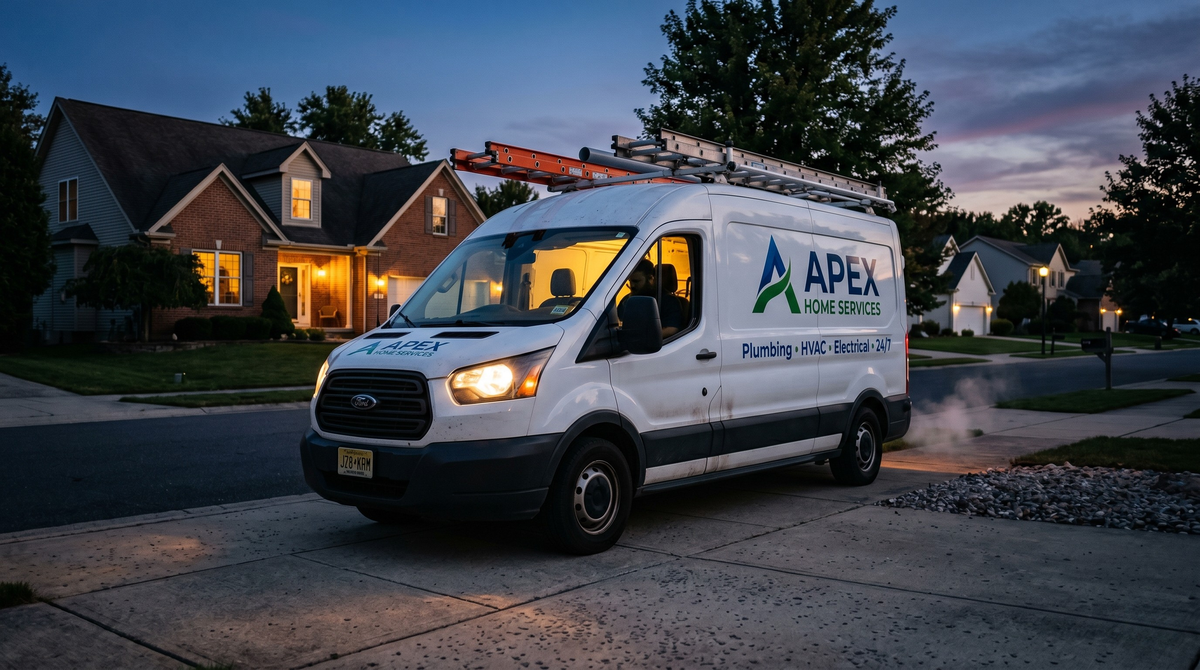
You bought the truck for the business. It hauls equipment, gets your crew to job sites, and represents your company every time it rolls down the road. What it's not supposed to do is take someone's kids to soccer practice on a Tuesday evening or make a grocery run on a Saturday morning.
But it happens. More than most business owners realize.
And the frustrating part isn't just the wasted fuel or the extra miles on the odometer. It's that you probably have no idea it's happening at all.
Why Unauthorized Vehicle Use Is So Common
Let's be fair to your employees for a moment. Most of them aren't bad people. They're not sitting around plotting how to take advantage of you. Unauthorized vehicle use usually starts small and gradually becomes habit.
It starts with something innocent. A driver finishes a job at 4:45 PM, lives 10 minutes away, and swings by the grocery store before heading back to the yard. No big deal, right?
Except it becomes a pattern. Then other drivers notice and do the same. Then someone takes a vehicle home on a Friday and uses it all weekend. Then someone drives 40 miles out of their way on a personal errand during work hours.
None of it feels dramatic in the moment. But across a fleet of 6, 8, or 10 vehicles — it adds up to real money, real liability, and real wear on your assets.
What Unauthorized Vehicle Use Actually Costs You
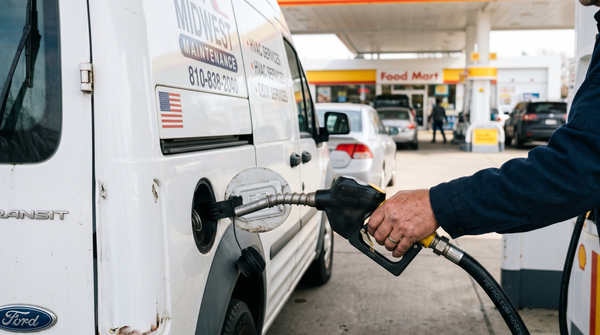
Fuel. Every personal mile driven is a mile you're paying for. If five drivers each add 20 personal miles per week to their routes, that's 100 extra miles per week — roughly 5,000 miles per year — that you're fueling for free.
Accelerated wear and tear. Every mile puts wear on tires, brakes, and the engine. Personal miles are miles you didn't budget for and didn't plan for. They shorten the lifespan of your vehicles and push maintenance schedules forward.
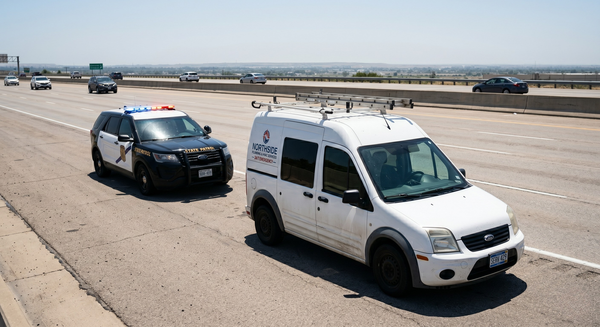
Insurance liability. This is the one that keeps business owners up at night. If one of your employees gets into an accident while using a company vehicle for personal use — especially outside of work hours — your commercial insurance policy may still be on the hook. Depending on your policy and the circumstances, that could mean a claim, a rate increase, or a coverage dispute at the worst possible time.
Your brand reputation. Your vehicles have your company name on them. How they're driven — and where they're seen — reflects on your business. A company truck parked outside a bar at 11 PM on a Thursday is not a great look, even if nothing bad happens.
The After-Hours Problem
Unauthorized use during work hours is one thing. After-hours use is another level entirely.
Some employees take company vehicles home with permission — that's a legitimate arrangement for early-start crews or on-call technicians. But even then, "taking it home" shouldn't mean "using it freely all evening and weekend."
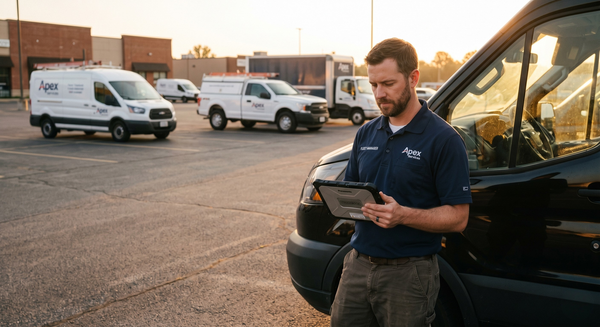
Without any visibility into what happens to your vehicles after 5 PM, you're essentially handing over the keys with no accountability attached.
Common after-hours scenarios business owners discover once they install GPS tracking:
- Vehicles making long trips on evenings and weekends with no business purpose
- Vehicles parked at locations that have nothing to do with work
- Vehicles being driven by someone other than the assigned driver — a family member, a friend
- Vehicles leaving the state or traveling far outside the normal service area
None of these are hypothetical. They're things real business owners find out about — usually after something goes wrong.
How GPS Tracking Stops This Before It Becomes a Problem
The most powerful thing about GPS vehicle tracking isn't catching people after the fact. It's the prevention that happens the moment employees know the system is in place.
When your team knows that every trip is recorded — start address, end address, time, route, and duration — the temptation to use company vehicles for personal errands drops significantly. Not because you're threatening anyone, but because accountability changes behavior on its own.
Here's what Fleet Aware gives you specifically:
After-Hours Alerts
You can set custom notifications that trigger any time a vehicle moves outside of your defined business hours. If your workday ends at 5:30 PM and a vehicle starts moving at 7:00 PM, you get an alert immediately — via push notification, SMS, or email.
You decide what to do with that information. Maybe it's a legitimate reason. Maybe it's not. Either way, you know.
Smart Geofences
Fleet Aware's Smart Geofence feature lets you draw a virtual boundary around any location — your yard, your home base, a job site, or even a geographic area. [1]
Here's how service businesses use geofences to prevent unauthorized use:
Home base departure alerts. Get notified the moment a vehicle leaves your yard outside of business hours. If a truck leaves at 9 PM on a Friday, you know within seconds.
Geographic boundary alerts. Set a boundary around your service area. If a vehicle travels outside that area — say, 30 miles beyond your normal operating zone — you get an alert.
Return confirmation. Know when vehicles return to the yard at the end of the day. If a vehicle that should be back by 6 PM still hasn't returned by 7 PM, you'll know.
Full Trip History — Every Day, Every Vehicle
Every trip your vehicles take is recorded automatically and stored in your trip history.
That means on Monday morning, you can pull up the weekend's activity for any vehicle and see exactly what happened — where it went, when it left, how long it was driven, and what route it took.
You're not accusing anyone of anything. You're just reviewing the record. And if something looks off, you have the data to have a real, fact-based conversation.
How to Talk to Your Team About This
Transparency is the right approach here — and it's also the most effective one.
Before you install tracking, have a straightforward conversation with your team. You don't need to make it dramatic or accusatory. Something like:
"We're adding GPS tracking to all of our vehicles. It tracks location, trips, and driving behavior during and after work hours. This helps us manage fuel costs, protect the vehicles, and make sure we're covered from a liability standpoint. If you ever have a question about what's being tracked, just ask."
Most employees will respect that. The ones who push back hardest are often the ones who have the most to lose from the visibility — and that's useful information too.
Being upfront also protects you legally. In most states, employers are permitted to track company-owned vehicles, but transparency is always the cleaner approach — both ethically and legally.
Setting a Clear Vehicle Use Policy
GPS tracking works best when it's paired with a written vehicle use policy. This doesn't need to be a 10-page legal document. A simple, clear one-pager that covers:
- Authorized use — what the vehicle is for and who is permitted to drive it
- After-hours use — whether it's permitted, and under what circumstances
- Personal errands — explicitly prohibited during and after work hours
- Passengers — who is and isn't permitted to ride in company vehicles
- Consequences — what happens if the policy is violated
Have every driver sign it. Keep a copy on file. Now you have a policy, a tracking system, and a signed acknowledgment. That's a complete framework — not just a rule nobody remembers.
What Fleet Aware Makes Possible
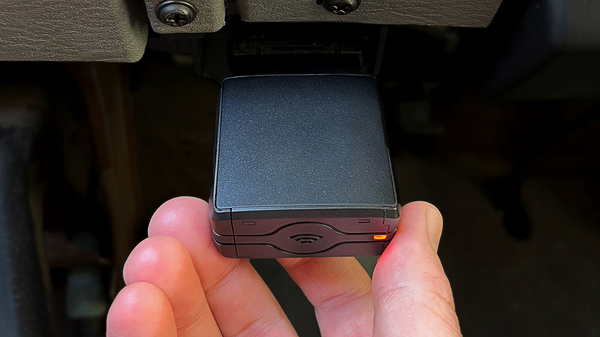
With the Fleet Tracker plugged into each vehicle, unauthorized use monitoring is automatic from day one.
Here's the full picture of what you get:
- After-hours movement alerts — customizable by time of day and day of week
- Smart Geofences — set boundaries around your yard, service area, or any address
- Full trip history — every trip recorded with start address, end address, time, and duration
- Weekend activity review — pull up any vehicle's activity for any date range in seconds
- Real-time location — see where every vehicle is right now, any time you want
- All for $15/month per vehicle — no long-term contract, cancel anytime
The Bottom Line
Your vehicles are assets. They cost you money to buy, money to insure, money to fuel, and money to maintain. Letting them be used for personal errands — knowingly or unknowingly — is a slow drain on all of those investments.
The fix isn't complicated. It's visibility, a clear policy, and a team that knows both are in place.
Protect your vehicles. Know where they are. Run a tighter operation.
👉 Get started with Fleet Aware →
Questions? Chat with us or call (855) 712-9273. No pressure, no demo required.