How to Know Where Your Vehicles Are (Without Calling Your Drivers Every Hour)
A practical guide for small business owners who are done guessing where their drivers are.


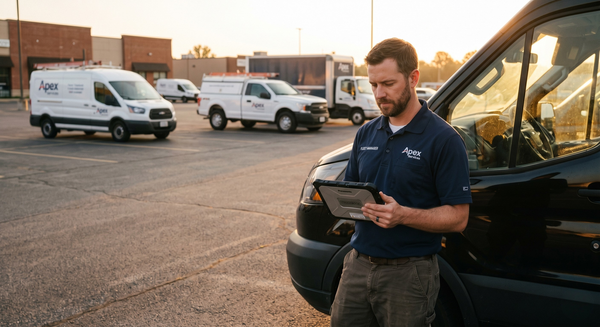
If you run a service business — HVAC, electrical, plumbing, landscaping, construction — you already know the feeling. It's 2:30 in the afternoon and you have no idea where your crew is. You call. No answer. You call again. They pick up and say they're "almost at the job site." But are they?
You're not a bad boss for wondering. You're just running a business without the right tools.
Here's the good news: knowing exactly where your vehicles are, what your drivers are doing, and how your fleet is performing is no longer complicated or expensive. Let's break it down.
The Real Cost of Not Knowing
Before we get into solutions, let's talk about what "not knowing" is actually costing you.
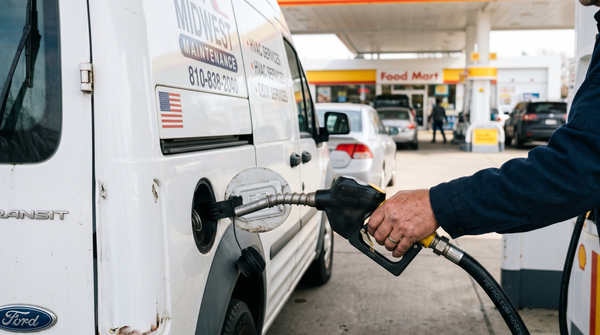
Fuel waste adds up fast. When drivers idle for long stretches, take longer routes, or make unnecessary stops, your fuel bill climbs — and you have no way to trace why.
Long lunch breaks and personal errands. Without visibility, some employees treat company vehicles like personal cars. A 45-minute lunch becomes two hours. A quick errand turns into a detour across town.
Customer disputes. A client calls saying your technician never showed up — or showed up late. Without proof, you're stuck taking someone's word for it.
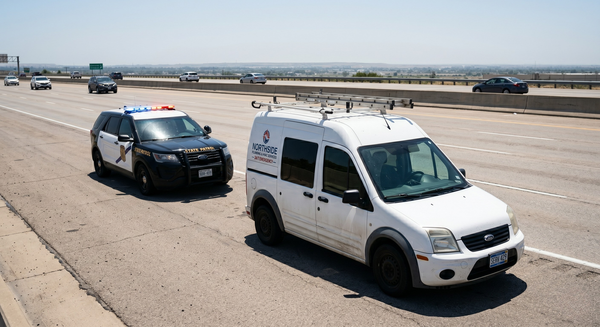
Wear and tear from bad driving habits. Hard braking, rapid acceleration, and aggressive driving don't just create safety risks — they quietly destroy your vehicles and drive up maintenance costs over time.
None of this is dramatic. It's just the slow, steady drain that happens when you're running a fleet on trust alone.
What GPS Vehicle Tracking Actually Does (In Plain English)
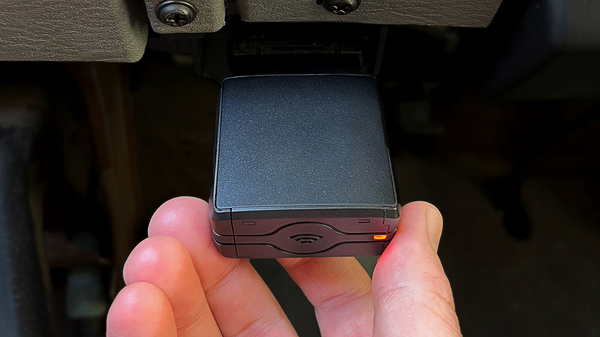
GPS fleet tracking is simply a small device that plugs into your vehicle and tells you — in real time — where that vehicle is, how it's being driven, and what it's been up to all day.
No complicated installation. No mechanic required. Most devices plug directly into the OBD-II port, which is the same port your mechanic uses to read engine codes. It's located under the steering wheel in virtually every vehicle made after 1996.
Once it's plugged in, you can open an app on your phone or pull up a dashboard on your computer and see:
- Where every vehicle is right now — live, on a map
- Where each vehicle has been — full trip history with start and end addresses
- How your drivers are behaving — speeding alerts, hard braking, excessive acceleration
- How much fuel is being used — per trip and across your whole fleet
- How long vehicles have been idling — one of the biggest hidden fuel costs for service businesses
That's it. No black box. No mystery. Just clear, useful information that helps you run a tighter operation.
Who Actually Needs This?
If your vehicles leave a home base in the morning, service a local or regional area throughout the day, and return in the evening — GPS tracking was built for you.
That includes:
- HVAC and plumbing companies managing multiple technicians across different job sites
- Electrical contractors with vans spread across a city
- Construction crews moving between job sites
- Landscaping companies running multiple routes simultaneously
- Catering and food service businesses juggling multiple locations
- Cleaning and janitorial services with lone technicians in the field
If you've ever had to call a driver to find out where they are, you need this.
What to Look for When Choosing a GPS Tracker
Not all GPS tracking solutions are created equal. Here's what actually matters for a small business owner:
✅ No Long-Term Contracts
Many GPS tracking companies lock you into 2 or 3-year contracts — often financing the hardware cost into the monthly fee so you feel like you're getting a deal. You're not. Look for a solution that's month-to-month so you can scale up or down as your business changes. Seasonal businesses especially benefit from this — you shouldn't be paying for tracking on vehicles that are sitting idle all winter.
✅ Easy Self-Installation
You shouldn't need to schedule a mechanic or take your vehicles off the road for a day just to get tracking set up. A plug-and-play OBD-II device takes about 60 seconds per vehicle to install.
✅ Real-Time Updates
Some cheaper trackers update every few minutes. That's not real-time — that's a delay. Look for a tracker that updates every few seconds so you're seeing live data, not a snapshot from five minutes ago.
✅ Transparent Pricing
You should know exactly what you're paying per vehicle, per month — with no hidden fees, no activation charges, and no surprises.
✅ A Mobile App That Actually Works
You're not always at a desk. Make sure the solution has a solid mobile app so you can check on your fleet from anywhere.
A Real Example of What Changes
Imagine it's Monday morning. You have 8 vehicles on the road. By 10 AM, you already know:
- Vehicle #3 has been idling for 18 minutes at a gas station
- Vehicle #6 is speeding — 12 mph over the limit on the highway
- Vehicle #1 just arrived at the first job site of the day
- Your whole fleet has driven a combined 94 miles so far this morning
You didn't make a single phone call to find that out.
Now imagine a customer calls at 3 PM claiming your technician never showed up. You pull up the trip history, see the exact arrival time, the address, and how long the vehicle was parked there. Dispute resolved in 30 seconds.
That's what visibility does for a business.
How Fleet Aware Makes This Simple
Fleet Aware was built specifically for small and mid-sized service businesses that need real fleet visibility without the enterprise price tag or the long-term commitment.
Here's what makes it different:
- $15/month per vehicle — no contracts, cancel anytime
- The Fleet Tracker is a simple plug-and-play OBD-II device — no tools, no mechanic, no downtime
- Set up in under 30 minutes — most business owners are tracking their entire fleet before they finish their morning coffee
- Real-time GPS updates every 5 seconds — not every few minutes
- Full trip history with start and end addresses, driver behavior alerts, fuel usage, and idling time
- Automated fleet reports delivered daily, weekly, or monthly straight to your inbox
- Works on gas, hybrid, and electric vehicles
You can even add your vehicles to the system before the hardware arrives. The moment you plug in the Fleet Tracker, your vehicles are already enrolled and tracking instantly.
Getting Started Is Easier Than You Think
One of the biggest reasons small business owners put off GPS tracking is the assumption that it's complicated to set up or manage. It's not — at least not with the right solution.
With Fleet Aware, you can:
- Order online — no demo required, no sales call needed
- Add your vehicles immediately after checkout using VIN scanning or a simple photo of your license plate
- Plug in the Fleet Tracker when it arrives — it takes about 60 seconds per vehicle
- Open the app and start seeing your fleet in real time
That's it. No IT department. No installation appointment. No long onboarding process.
The Bottom Line
You built your business by working hard and making smart decisions. Not knowing where your vehicles are, how your drivers are behaving, or where your fuel dollars are going isn't a small problem — it's a gap in your operation that costs you money every single day.
GPS vehicle tracking closes that gap. And with a solution like Fleet Aware, it doesn't have to be expensive, complicated, or locked into a long-term contract.
Know where your fleet is. Know what your drivers are doing. Run a tighter business.
Have questions about whether Fleet Aware is right for your business? Call us at (855) 712-9273 or chat with us online. No pressure, no demo required.